Introduction
AI-assisted software development is growing, and as someone who enjoys empowering people with technology, I find this trend exciting. It involves creating or changing software using clear ideas, natural language prompts, or basic frameworks. It’s quick, impressive, and quite freeing.

And yet, when you look at the bigger picture, something feels off.
Statistical patterns vs grounded in secure practices
While vibe coding is a useful tool for sharing ideas, creating prototypes, exploring, and onboarding, it has weaknesses that technical leaders and engineering teams must address. The foundational models trained on Python, TypeScript, and other programming languages often learn from vast amounts of public code, which may not always represent secure or maintainable engineering practices. Some patterns they derive are simply statistical trends and lack a basis in solid software design principles, such as secure design and zero trust. This dependence on potentially flawed data can lead to misunderstandings about best practices, causing developers to adopt insecure or inefficient coding habits without realizing it. As technology changes quickly, relying on outdated or poorly written examples can stifle innovation and weaken the integrity of software projects.
The illusion of safety in noise reduction
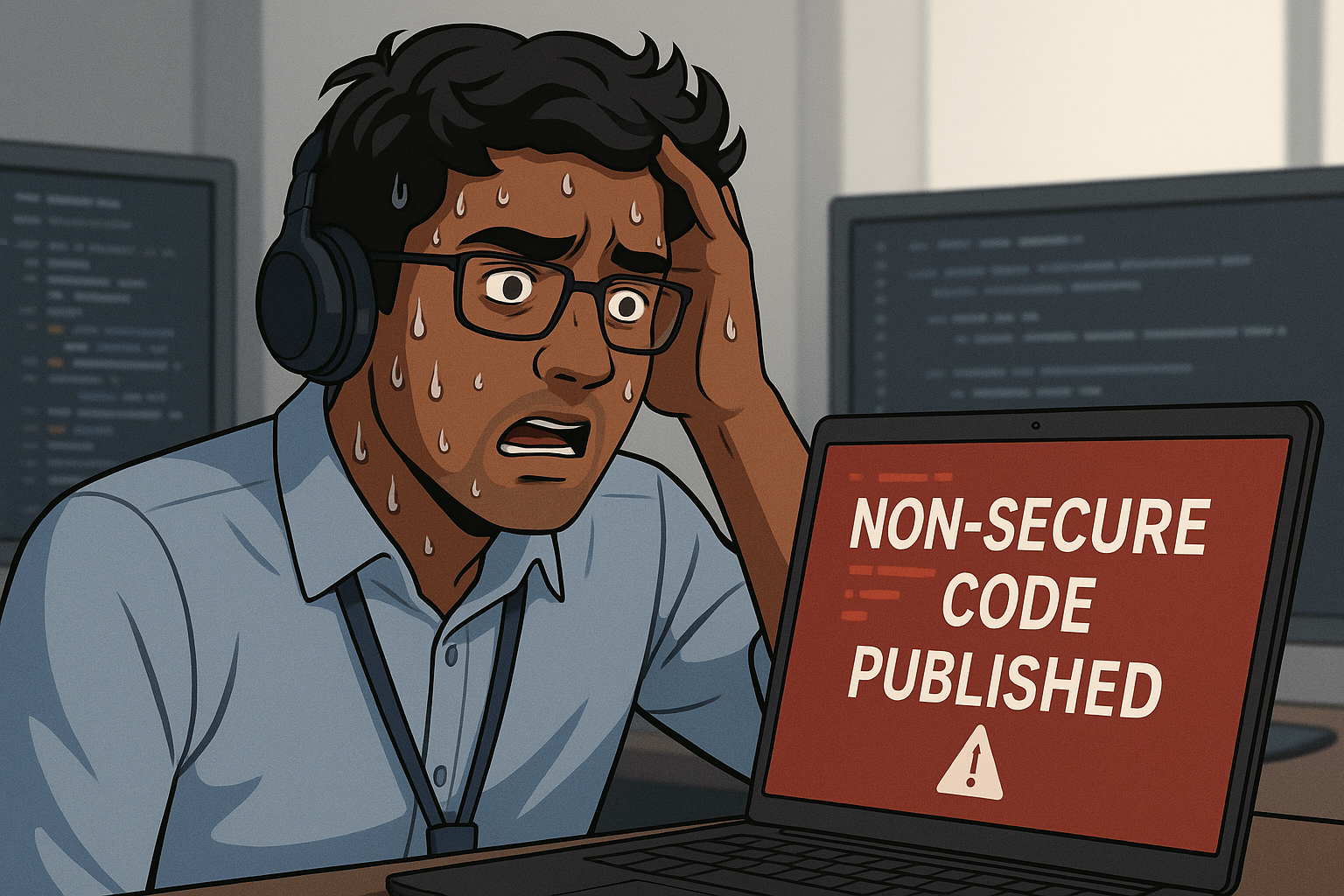
Auto-complete features and noise reduction methods in AI coding depend on making patterns in the training data look smoother instead of being based on proven engineering principles. The purpose of these coding solutions is to mitigate friction in the realization of ideas rather than to impose constraints. An unfortunate consequence of this approach is the semblance of correctness: the code appears polished, and the functions seemingly operate as intended; yet, the foundational logic may be flawed, insecure, or incompatible with operational requirements. I draw upon my experience with large enterprises in guiding them toward low-code solutions, and this was a common concern expressed by many of them.
Is the code maintainable?
Although it is improving, vibe-coded software still lacks explainability and rationale. During service outages, particularly when the outage cascades across microservices, third-party dependencies, or cloud infrastructure, it is essential to have more than just syntactically correct code.
You need to have context, contracts, and traceability. Code that is “vibe-coded” into existence often fails the test of operational readiness. Without proper guardrails, you end up with something far worse than legacy software—there, I said it! Legacy software is an example of live software that no one understands and gets really hard to decompose and do anything meaningful.
We are already seeing early signs of this in open-source projects where AI-generated code has proliferated. There are repositories brimming with redundant logic, ambiguous abstractions, and fragile dependencies. In some cases, contributors can’t explain why a block of code exists or what might break if it changes.
Secure Coding and Zero Trust as guardrails are non-negotiable
Now, I am not saying we need to reject AI-generated code; in fact, far from it. The solution is to ground it in the enterprise secure coding principles and zero trust architectures. These should serve as rails, not brakes, on this new mode of development. Enterprises must invest in tooling, policy, and culture that elevate contextual understanding, threat modeling, and least-privilege execution.
The promise of agentic development is real. We will get to a future where intelligent systems reason about business intent, architectural constraints, and security posture before generating code. But we are not there yet. Until then, vibe coding without governance is a fast lane to spaghetti code. Code that looks modern but behaves like legacy.
Let us celebrate the creativity this new medium offers, but let us not confuse vibes with validation!